What is an Abrasion Resistance Tester and How to Choose One?
In the world of material testing, the Abrasion Resistance Tester stands out as a crucial tool. This device measures a material's ability to withstand wear from friction and impact. Industries such as textiles, plastics, and coatings rely heavily on these tests. Choosing the right Abrasion Resistance Tester can be overwhelming due to the variety of options available.
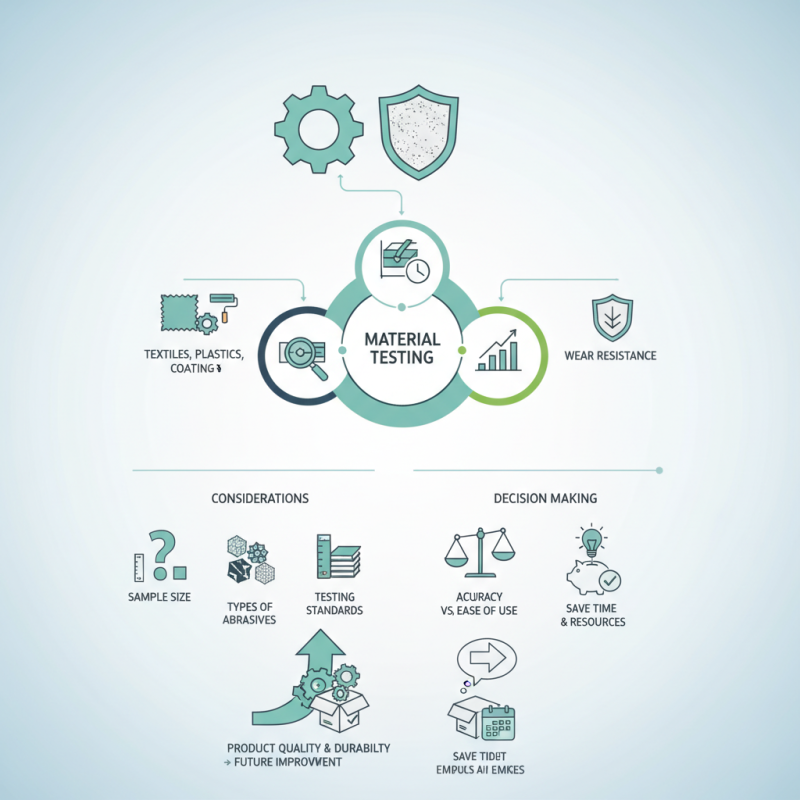
Understanding your specific needs is vital. Different materials require different testing methods. Consider factors like sample size, types of abrasives, and testing standards. A thorough assessment ensures reliable results. It’s important to recognize that not all testers are equal. Some may provide more accurate readings. Others might be easier to use, but compromise on precision.
Ultimately, the choice of an Abrasion Resistance Tester impacts product quality and durability. A thoughtful selection process helps avoid costly mistakes down the line. Companies can save time and resources with the right tools in place. Reflecting on past testing processes can guide better decision-making in the future.
What is an Abrasion Resistance Tester and Its Importance in Material Testing
An abrasion resistance tester is crucial for evaluating material durability. It measures how well materials resist wear caused by friction. This information is vital for industries like textiles, automotive, and construction. Understanding abrasion resistance helps ensure products last longer and perform better under stress.
When choosing an abrasion resistance tester, it's important to consider specific features. Look for devices that replicate real-world conditions accurately. Some testers allow you to adjust speed and pressure, simulating different usage scenarios. This capability can provide more relevant results. Accuracy and reliability in testing methods are essential for effective evaluations.
**Tips:** Always check for calibration options. Regular maintenance can extend the life of your tester. Make sure to review your testing methods periodically. Refining your approach can improve testing outcomes. Consider training for your team to enhance their understanding of the equipment. The right knowledge makes a significant difference.
Key Features and Specifications to Consider When Choosing an Abrasion Tester
When selecting an abrasion resistance tester, several key features and specifications are essential. Testers vary in design, providing different methods of measuring wear and tear. Assess the type of materials you need to test. For textiles, consider testers like Martindale or Wyzenbeek. For hard surfaces, you might prefer a Taber tester. Each method provides distinct results and levels of accuracy.
Accuracy is crucial. A reliable tester should have a consistent measurement scale. Look for features like adjustable load settings. This allows for testing of various materials under different conditions. Consider the machine's speed and wear cycle capabilities. Reports indicate that testers with more precise control provide measurable benefits in quality assurance.
Calibration is another point to evaluate. An abrasion tester needs regular recalibration to maintain accuracy. Some testers incorporate automatic calibration systems. These enhance reliability but may increase costs. Additionally, check for compliance with industry standards. Reports show that adherence to ASTM and ISO standards is vital for credible results. Investing time in selecting the right features can prevent costly errors in material processing.
Understanding Different Types of Abrasion Resistance Testing Methods
Abrasion resistance testing is crucial across various materials, from textiles to coatings. Different methods exist for assessing this important characteristic. The two most commonly used abrasion testing methods are the Taber test and the Martindale test. Each serves distinct industries and purposes.
The Taber test employs a rotating platform and abrasive wheels. It simulates repeated wear on a surface. This method can predict longevity in applications like flooring and plastics. Many studies show that Taber tests can provide a quantitative measure of wear. They often specify a loss in weight of materials subjected to abrasives. In some cases, results indicate a wear loss of 0.5 grams can significantly reduce product lifespan.
Conversely, the Martindale test is widely used in the textile industry. It measures the durability of fabrics against abrasion. This method involves rubbing the fabric against itself or another material. Most reports suggest that a Martindale rating below 15,000 cycles indicates low durability. Testing conditions can vary widely. Fabrics might perform differently depending on thickness or fiber blend, emphasizing the need for careful selection. Knowing these differences can guide manufacturers in choosing the right method for their specific materials and end-use applications.
Industry Standards and Testing Protocols for Effective Abrasion Testing
When selecting an abrasion resistance tester, understanding industry standards and testing protocols is essential. Various standards, such as ASTM D4060 and ISO 5470-1, guide the abrasion testing process. These documents provide frameworks for assessing materials under specific conditions. They outline test methods, sample preparation, and evaluation criteria, ensuring consistency and reliability in results.
Critical parameters to consider include the type of material and the expected use case. For instance, textiles, coatings, and plastics may require different testing approaches. Understanding these nuances can lead to better selection of testers and methods. A recent study indicated that poorly chosen testing protocols can lead to 30% variability in results. This highlights the importance of adhering to established guidelines.
Tips for effective testing: ensure your testing environment mimics actual use conditions. Also, cross-reference results against multiple standards for thorough validation. Regularly review your testing methods, as improvements in technology may influence best practices. Abrasion resistance is vital in industries like automotive and construction, where material longevity impacts safety and performance.
Common Applications and Materials Assessed by Abrasion Resistance Testers
Abrasion resistance testers are essential tools in various industries. They measure how materials endure wear and tear from friction. Common applications include testing flooring, textiles, and coatings. Manufacturers rely on these tests to ensure durability.
Flooring materials like tiles and carpets undergo rigorous testing. This ensures they can withstand foot traffic without excessive wear. Textile industries often test fabrics to identify their longevity. Coatings for metals and plastics also need evaluations to enhance performance.
Choosing the right tester is crucial. Understanding the material type and intended use is vital. Some testers perform better with hard surfaces, while others are designed for softer materials. Not all tests are equal; results may vary based on conditions. Having accurate data leads to better product decisions. Inconsistent results can hinder production and consumer trust. An informed choice is essential for quality assurance in manufacturing.
Abrasion Resistance Test Results of Various Materials
 Metal Processing
 Automotive
 Food & Beverage
 Chemical
 Consumer Electronics
 Healthcare
 New Retail
 Semiconductor
 Welding
 Palletizing
 Loading and Unloading
 Assembly
 Bin Picking
 Gluing
 Insertion
 Polishing
