Providing professional services to meet various customer needs and qualified technical support to answer multiple questions.
You ask - we answer.
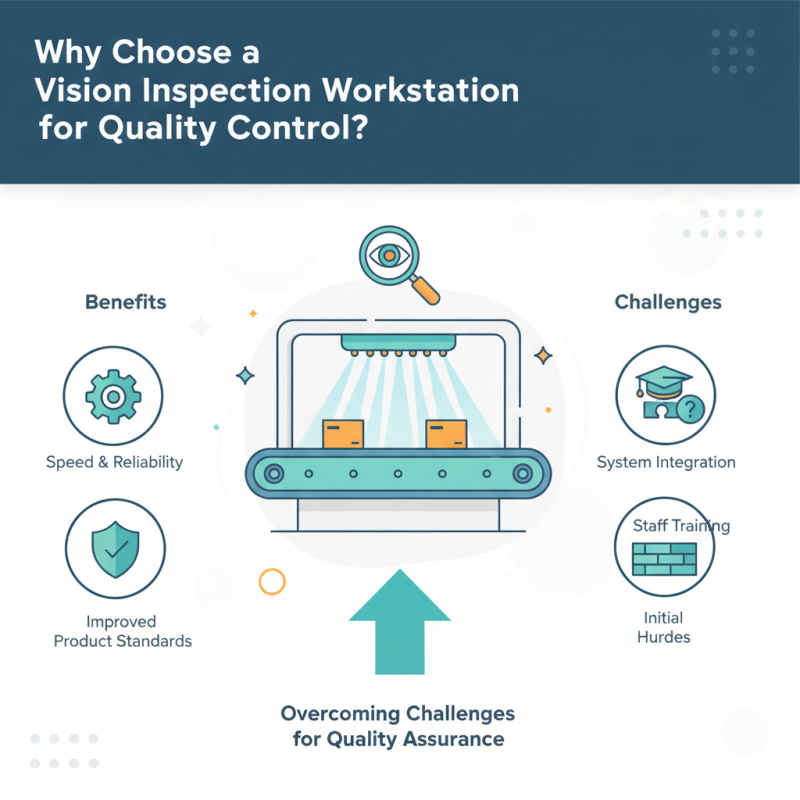
Why Choose a Vision Inspection Workstation for Quality Control?
In the fast-evolving world of manufacturing, ensuring quality is paramount. A Vision Inspection Workstation plays a key role in enhancing product standards. According to Emily Carter, a leading expert in quality control, “The integration of advanced vision systems can detect flaws that human eyes often miss.” This highlights the precision essential for today’s competitive market.
Adopting a Vision Inspection Workstation is not just about technology; it reflects a strategic approach to quality management. These workstations combine high-resolution cameras and intelligent software to analyze products in real-time. They offer speed and reliability, often outperforming traditional manual checks.
Despite advancements, challenges remain. Companies may face difficulties in integrating new systems with existing processes. Training staff to operate these sophisticated workstations can also be demanding. Yet, as Emily Carter points out, overcoming these hurdles is vital for true quality assurance. Embracing a Vision Inspection Workstation may not be easy, but the benefits far outweigh the initial challenges.
Benefits of Vision Inspection Workstations in Quality Control
Vision inspection workstations have become essential tools in quality control across various industries. These systems leverage advanced imaging technology to detect defects in products, improving quality assurance processes significantly. According to industry reports, organizations implementing vision inspection have noted a reduction in defect rates by up to 50%. This improvement translates to lower operational costs and enhanced customer satisfaction.
Tips: Invest in training for staff using these workstations. Proper training maximizes effectiveness and helps minimize operational errors.
The benefits of integrating vision inspection workstations are numerous. They provide real-time feedback, allowing for quicker decision-making. Additionally, they can analyze multiple parameters simultaneously, ensuring that each aspect of the product meets established standards. According to a survey by the Association for Advancing Automation, businesses have seen productivity gains of up to 30% due to automation in inspection processes. However, one must also be mindful of the initial investment and ongoing maintenance costs associated with these systems. Regular reviews of performance can offer insights into potential areas for improvement.
Tips: Continually monitor the workstation's performance. Regular updates and adjustments can help in achieving optimal results.
Benefits of Vision Inspection Workstations in Quality Control
Key Features of Vision Inspection Systems for Enhanced Accuracy
Vision inspection workstations play a crucial role in modern quality control processes. These systems enhance accuracy in manufacturing by utilizing advanced imaging technology to detect defects and ensure product integrity. A study by the Automation Research Institute shows that implementing vision inspection can reduce error rates by up to 30%. This creates significant cost savings and boosts production efficiency.
Key features of vision inspection systems include high-resolution cameras, real-time image processing, and customizable software. High-resolution cameras capture intricate details, reducing the risk of missing defects. Real-time processing allows immediate feedback, enabling adjustments on the production line. A recent report from the Quality Assurance Association found that 85% of manufacturers noted improved quality control after upgrading to vision systems.
Tips: Regularly calibrate your vision inspection system to maintain accuracy. Also, involve your team in the system's updates. Their insights can reveal areas needing improvement. This collaborative approach will enhance system performance. Identifying limitations in your current setup can guide you toward better technology. A critical review will help in selecting features that align with your specific needs.
Comparative Analysis: Manual Inspection vs. Automated Vision Systems
In the realm of quality control, the choice between manual inspection and automated vision systems often arises. Manual inspection has been a staple in many industries for decades. It relies heavily on human judgment to detect defects. However, studies show that manual inspections can yield error rates as high as 30%. This variability can compromise overall product quality, leading to increased returns and unhappy customers.
Automated vision systems offer consistent results. According to a 2022 industry report, automated systems can achieve defect detection rates exceeding 99%. They utilize advanced algorithms and high-resolution cameras to scan products accurately. This technology minimizes human error and significantly enhances inspection speed. For example, a typical manual inspection might take several minutes per unit, while an automated system can accomplish this in seconds.
**Tip:** When considering an automated system, assess the specific needs of your production line. Evaluate the types of defects most frequently missed during manual inspections.
Yet, transitioning from manual to automated systems is not without its challenges. Initial costs can be daunting, and training is essential for effective implementation. Companies must reflect on their long-term goals before making the shift.
**Tip:** Gradually integrating automation can be beneficial. Start with a pilot program to gauge effectiveness and gather insights before full implementation.
Common Applications of Vision Inspection Workstations in Industries
The use of vision inspection workstations is becoming increasingly common across various industries. In manufacturing, for example, these systems are often employed for quality assurance. According to a recent report, about 80% of manufacturers experience defects in their production lines. Vision inspection workstations help identify these defects quickly, improving efficiency and reducing waste.
In the electronics sector, vision systems are vital for inspecting circuit boards. These workstations can detect misalignments, soldering issues, or component damage within seconds. It is estimated that about 70% of electronics manufacturers have adopted automated inspection systems to meet stringent quality standards. Such systems not only save time but also ensure that only defect-free products reach the market.
The pharmaceutical industry uses vision inspection workstations to check the labeling and packaging of medications. An alarming 25% of all recalls in this industry result from labeling errors. By implementing vision inspection technologies, companies enhance compliance and minimize risks associated with human error. Yet, reliance on automation also raises concerns about over-dependence. Striking a balance between human oversight and machine efficiency remains a key challenge in maintaining quality control.
Why Choose a Vision Inspection Workstation for Quality Control? - Common Applications of Vision Inspection Workstations in Industries
Application Area
Common Uses
Benefits
Electronics Manufacturing
Inspection of PCB assemblies, solder joints, and component placements
Increased precision and defect detection rates
Pharmaceuticals
Verification of packaging integrity, label correctness, and expiration dates
Ensured compliance with regulations and patient safety
Automotive
Quality checks on components like dashboards, sensors, and seals
Reduction in recalls and improved reliability of vehicles
Food & Beverage
Ensuring correct label placement and verifying package seals
Enhanced food safety and brand trust
Textiles
Quality control for fabric defects and stitching accuracy
Improved product quality and customer satisfaction
Future Trends in Vision Inspection Technology and Quality Control
The landscape of vision inspection technology is rapidly evolving. As industries demand higher quality and reliability, companies are investing in advanced systems. Automated inspection stations are becoming standard in manufacturing. These systems seamlessly integrate with production lines, enhancing efficiency.
Future trends indicate a shift towards artificial intelligence in quality control. AI-driven systems can analyze data faster and more accurately. This technology offers real-time insights, identifying faults that human inspectors might miss. However, the reliance on technology raises concerns regarding over-dependence. Mistakes can happen, and companies need to maintain human oversight.
Moreover, the use of machine learning in vision inspection is on the rise. These systems learn from previous inspections, improving their accuracy over time. Yet, as they evolve, they may require constant updates and maintenance. Companies must weigh the benefits against potential technical challenges. Investing in vision inspection technology is essential, but so is the need for a balanced approach to human and machine collaboration.
Learn useful insights, save and exchange knowledge easily with MyDobot User Center
Establish Contact with Dobot Experts
Take part in automation transformation. Let’s work together towards a more efficient tomorrow.
Contact Information
Virtual Controller Application
We provide a free trial application for the robot cloud virtual controller. Fill in the following information and we will issue you a 12-hour license.
Contact Information
File sent
The related product information has been sent, please kindly check your email.
Loading, please wait...
Join Dobot+ Ecosystem to Forge Deeper Partnerships
Dobot sincerely invites robotics software companies and hardware manufacturers to Dobot+. Together we can offer best in class solutions to end users in various industries.