Industries

Collaborative robots offer competitive advantages to businesses across industries.
Learn More

Applications

Dobot's robots are capable of performing a wide range of tasks more efficiently.
Learn More
Support

Blog

Providing professional services to meet various customer needs and qualified technical support to answer multiple questions. 

You ask - we answer. 

What are the Different Types of Ball Bearings and Their Uses?

Ball Bearings are essential components in many machines. They reduce friction between moving parts, facilitating smooth operation. Various types of ball bearings exist, each designed for specific applications. Understanding these types helps in selecting the right one for your needs.

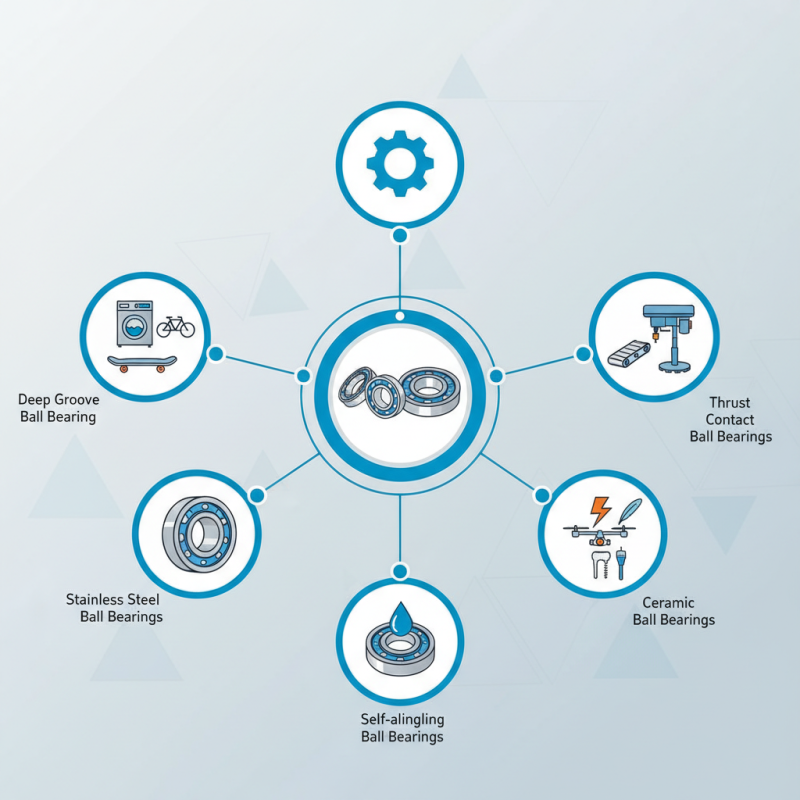
Different designs and materials affect performance and durability. For instance, stainless steel ball bearings resist rust, making them ideal for wet environments. On the other hand, ceramic ball bearings offer lightweight benefits and high-speed stability.

Using the correct ball bearing can enhance efficiency and prolong equipment life. However, many overlook this important choice. Choosing a ball bearing demands careful consideration. The process can be daunting with numerous options available. However, a little research can lead to significant improvements in performance.

What are the Different Types of Ball Bearings and Their Uses?

Types of Ball Bearings: An Overview of Common Varieties

Ball bearings play a crucial role in various machinery. They reduce friction between moving parts, enhancing efficiency. Different types of ball bearings are designed for specific applications. Here’s an overview of some common varieties.

Deep groove ball bearings are the most popular type. They handle both radial and axial loads well. These bearings are widely used in electric motors, automotive applications, and household appliances. Their versatility makes them a go-to choice for many designs.

Angular contact ball bearings are designed for high-speed applications. They can accommodate axial loads in one direction. These bearings are ideal for machine tools and racing cars, where performance matters. Their unique design allows for higher precision.

Tips: When selecting a ball bearing, consider the load type and speed. Ensure your choices match the application requirements. Regular maintenance extends the lifespan of bearings. Consider checking for wear and tear periodically.

Self-aligning ball bearings allow for misalignment. They can handle slight shaft deflections, which is useful in conveyor systems. However, they may not perform well under high speeds or heavy loads. Balancing performance and application needs is essential.

Excessive heat can compromise bearing integrity. Monitor operating temperatures, as fluctuating heat levels impact performance. Sometimes, you may find that perfect fit is not easily achieved. Adjustments may be necessary to optimize function.

Applications of Deep Groove Ball Bearings in Various Industries

Deep groove ball bearings are crucial components in many industries. They feature a simple design and can handle both radial and axial loads. This versatility makes them a favorite choice for applications ranging from automotive to aerospace.

In automotive manufacturing, deep groove ball bearings support engines and wheels. They endure high speeds and heavy loads. According to a recent industry report, these bearings can improve efficiency by up to 15%. In aerospace, they help reduce friction, enhancing the performance of aircraft engines. The reliable operation of these bearings is vital for safety and efficiency.

When selecting deep groove ball bearings, consider the operating environment. Temperature fluctuations, dust, and moisture can impact their lifespan. Regular maintenance is essential. Inspect bearings regularly for signs of wear. Timely replacement can prevent serious equipment failure.

Tips: Always check for proper lubrication. Over or under-lubrication can lead to breakdowns. Choose high-quality materials to ensure durability. In some cases, it might be worth investing in newer technologies to enhance performance. Pay attention to specific requirements for your application.

What are the Different Types of Ball Bearings and Their Uses?

Type of Ball Bearing Applications Common Industries
Deep Groove Ball Bearing Used in electric motors, automotive applications, and industrial machinery. Manufacturing, Automotive, Aerospace
Angular Contact Ball Bearing Primarily used in machine tool spindles and high-speed applications. Machine Tools, Robotics
Self-Aligning Ball Bearing Ideal for applications where shaft misalignment may occur. Textile, Manufacturing
Thrust Ball Bearing Used in applications requiring axial load support. Automotive, Marine
Miniature Ball Bearing Commonly used in small precision devices and instruments. Electronics, Medical Devices

Exploring Angular Contact Ball Bearings and Their Specialized Uses

Angular contact ball bearings play a crucial role in various machinery. They are designed for high-speed applications. Their structure allows them to carry both radial and axial loads, making them ideal for gearboxes and electric motors. According to industry reports, the demand for these bearings is expected to grow at a rate of 4.5% annually.

These bearings offer enhanced performance due to their unique angular contact design. They can accommodate higher speeds and offer better precision. Industries such as aerospace and automotive often rely on them for their reliability. However, they can be more complex and expensive than standard ball bearings. This complexity requires careful consideration during selection and installation.

Tips: Regular maintenance is vital for angular contact ball bearings. Inspect them for signs of wear. Address any irregular noises promptly. Ensure proper alignment to maximize lifespan. Understanding their specifications is key to effective use. Evaluate your application’s requirements to make informed decisions.

Understanding Thrust Ball Bearings and Their Functional Roles

Thrust ball bearings play a critical role in various machinery applications. They are designed to support axial loads, which are forces acting along the axis of the shaft. This type of bearing allows minimal friction and enhances the overall efficiency of mechanical systems. With increasing demand in industries such as automotive and aerospace, understanding their functionalities is essential.

According to a recent industry report by ResearchAndMarkets, thrust ball bearings account for a significant percentage of the global bearing market. These bearings excel in vertical and thrust load applications, where stability is crucial. However, their limitations often arise, especially in high-speed operations. In such cases, they may experience wear or overheating, which can lead to early failure. Engineers must balance the required load capacity with speed capabilities.

Furthermore, thrust ball bearings can vary in design, such as single and double direction types. Their choice ultimately impacts system performance. A study from the International Journal of Advanced Manufacturing Technology highlights that improper selection of thrust bearings can result in decreased efficiency. Understanding their functional roles fosters better decision-making in engineering applications.

Key Differences Between Ceramic and Steel Ball Bearings

When choosing between ceramic and steel ball bearings, several factors come into play. Ceramic ball bearings are lighter and provide less friction. They are resistant to corrosion, making them ideal for harsh environments. However, they can be more brittle and prone to cracking under extreme stress. This is a crucial consideration for high-load applications.

Steel ball bearings, on the other hand, offer strength and durability. They handle heavy loads well and are often more affordable. Yet, they are susceptible to rust if not properly maintained. While they can be more forgiving in terms of handling and installation, they may require more frequent lubrication.

Tips: Always assess your project needs before deciding. Consider factors like weight, speed, and environmental conditions. Regular maintenance can extend the life of steel bearings, while precise installation is key for ceramic types. Remember, different applications might need different solutions. Test your bearings under real conditions for better performance insights.

User Center Features Promotion

Learn useful insights, save and exchange knowledge easily with MyDobot User Center

Establish Contact with Dobot Experts

Take part in automation transformation. Let’s work together towards a more efficient tomorrow.

Contact Information

Virtual Controller Application

We provide a free trial application for the robot cloud virtual controller. Fill in the following information and we will issue you a 12-hour license.

Contact Information

File sent

The related product information has been sent, please kindly check your email.

Join Dobot+ Ecosystem to Forge Deeper Partnerships

Dobot sincerely invites robotics software companies and hardware manufacturers to Dobot+. Together we can offer best in class solutions to end users in various industries.

Contact Information

Contact Form

Home

Virtual Controller Application

Top