
Providing professional services to meet various customer needs and qualified technical support to answer multiple questions.
You ask - we answer.
10 Essential Tips for Choosing an ATS 100 Automatic Transfer Switch?
Choosing the right ats 100 automatic transfer switch controller is vital for any electrical system. This device acts as a bridge during power outages, ensuring continuity and stability. However, the selection process is not as straightforward as it might seem. Many factors influence the decision, including system requirements, load capacity, and control features.
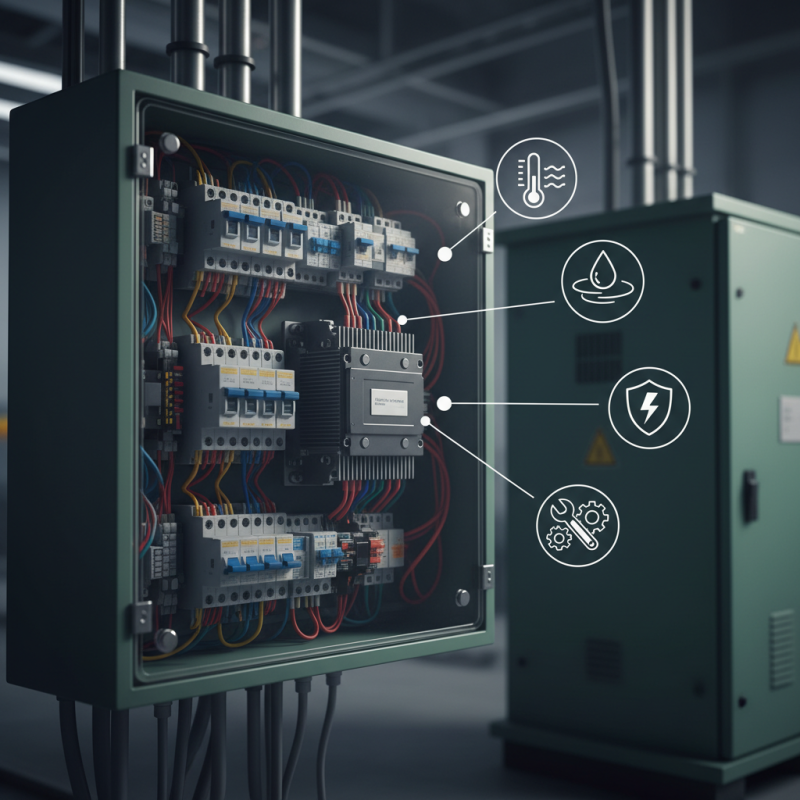
Consider the environment where the ATS will operate. Factors like temperature and humidity can affect performance. Additionally, installation and maintenance ease can save time and costs. While some may overlook these details, neglecting them can lead to operational issues later on. A detailed analysis of specifications can provide insight into the long-term reliability of the ATS 100 automatic transfer switch controller.
Don't forget to evaluate the brand's reputation. Well-established manufacturers often offer better support and warranty options. Yet, small-scale manufacturers might provide innovative solutions at competitive prices. Balancing these options requires careful consideration of what guarantees the best combination of performance and reliability for your specific needs.
Understanding the Basics of Automatic Transfer Switches (ATS)
Automatic Transfer Switches (ATS) are crucial for reliable power management during outages. They detect power loss and switch to a backup source instantly. Understanding the fundamentals of ATS is key when choosing the right one for your needs. These switches must match your electrical load and operational requirements.
When selecting an ATS, consider the environmental conditions and installation space. Some locations may require outdoor-rated switches. Pay attention to the performance specifications, including transfer time and durability. It's essential to ensure that the switch can manage the total load efficiently. Note that poor installation or incorrect sizing can lead to inefficiencies.
Finally, exploring maintenance requirements is vital. Regular checks on ATS functionality can prevent unexpected issues. Many overlook this aspect, thinking it's a one-time setup. Awareness of these details can significantly enhance reliability. Building a robust power management plan involves continuous reflection on system performance and adaptability to changing circumstances.
10 Essential Tips for Choosing an ATS 100 Automatic Transfer Switch
Tip No.
Tip
Explanation
1
Evaluate Power Requirements
Understand your total load requirements to ensure the ATS can handle peak power demands.
2
Consider Transfer Speed
Select an ATS with a transfer speed that meets your operational needs for minimizing downtime.
3
Check for Durability
Choose an ATS that is built for longevity and can withstand environmental conditions in your location.
4
Evaluate Load Management Features
Look for ATS that can manage multiple loads effectively and prioritize essential circuits.
5
Review Maintenance Requirements
Choose equipment that has accessible components for easy maintenance and troubleshooting.
6
Examine Control Options
Select an ATS with user-friendly controls and monitoring options for easy operation.
7
Assess Compliance with Standards
Ensure the ATS complies with relevant electrical and safety standards in your region.
8
Consider Automation Capabilities
Select an ATS that can integrate with other systems for automatic operation and notification.
9
Check for Warranty and Support
Look for manufacturers that offer a comprehensive warranty and dependable customer support.
10
Get Professional Evaluation
Consult with a professional to assess your specific needs and ensure the right choice of ATS.
Key Factors to Consider When Choosing an ATS 100 Model
Choosing the right ATS 100 Automatic Transfer Switch is crucial for seamless power management. A key factor is understanding your specific power needs. Calculate the total load to ensure the switch can handle it efficiently. Look for a model that offers flexibility in adapting to future electrical demands. Power outages can happen suddenly, so reliability is paramount. Select a unit known for its durability and operational consistency.
Another important consideration is ease of installation and maintenance. Ensure that the ATS model you choose comes with clear installation instructions. This reduces potential installation errors and helps save time. Check if the manufacturer offers customer support, which can be invaluable during the setup phase. It’s important to evaluate the switch's testing and certification. Certifications often reflect safety standards, providing peace of mind.
While aesthetics may not seem important, compact design matters in real-world applications. Consider the available space where your ATS will be installed. If the unit is bulky, it may complicate installation. Reflection on these aspects ensures that the ATS 100 model becomes a reliable component of your power management system, reducing future headaches.
Evaluating Power Capacity and Compatibility for Your ATS 100
When selecting an ATS 100 automatic transfer switch, evaluating power capacity is crucial. Know the total power demand of your equipment. Calculate the wattage of all essential devices. This ensures the ATS 100 can handle peak loads without failing. Inadequate capacity can lead to critical outages. A well-sized switch maintains the flow of energy seamlessly during a power interruption.
Compatibility is another key factor. Ensure the ATS 100 matches your existing electrical systems. Check voltage ratings and phase types. A mismatched switch can cause operational issues. Consider the transfer time as well; this affects how quickly your systems can respond. Strive for minimal downtime, especially if your operations are sensitive to interruptions. These evaluations require attention to detail and may need expert guidance. Balancing these aspects can sometimes be challenging. Rely on knowledgeable resources or professionals to navigate potential pitfalls.
Assessing Reliability and Durability Features in ATS 100
When choosing an ATS 100 Automatic Transfer Switch, assessing reliability and durability is crucial. Statistics show that nearly 30% of power outages last longer than five hours. In such cases, an effective transfer switch is invaluable. A robust ATS can ensure seamless backup power, minimizing operational disruptions.
Durability can often be gauged through materials and design. High-quality enclosures resist environmental wear, thus extending equipment life. A survey from the Electric Power Research Institute indicates that systems built with corrosion-resistant materials operate 25% longer than others. Even small factors, like the choice of terminals and connectors, play a significant role in long-term performance.
Consider real-world testing; an ATS could face demanding conditions. Subjecting the system to frequent cycles can reveal vulnerabilities. Some models may pass initial inspections yet fail under heavy use. Engineers often recommend performing thorough load testing. Understanding these aspects enhances your chances of selecting a reliable device. Effective evaluation fosters informed decision-making, reducing the likelihood of future failures.
Reliability and Durability Assessment of ATS 100 Automatic Transfer Switch
Exploring Budget Considerations and Warranty Options for ATS 100
When selecting an ATS 100 Automatic Transfer Switch, budget considerations play a crucial role. According to a recent industry report, approximately 40% of organizations underestimate the initial costs associated with purchasing an ATS. Understanding these costs is vital. You should consider not just the switch itself, but also installation, testing, and ongoing maintenance expenses. Many systems require specific configurations, which can also impact the overall budget.
Beyond initial costs, warranty options present a significant factor in long-term savings. Data shows that systems with extended warranties reduce unexpected repair costs by up to 30%. However, warranties can vary widely in terms of what they cover. It’s essential to analyze the terms thoroughly. Some warranties only cover parts, while others include labor and additional services. These choices can greatly influence overall reliability and operational costs.
It’s critical to reflect on the balance between cost and quality. Investing in a lower-priced solution may save money upfront but could lead to higher maintenance costs later. Ensuring the switch’s reliability is paramount, as downtime can be costly. Evaluating long-term performance alongside initial budget constraints will yield better results. Prioritizing value over the lowest price can lead to a more sustainable investment.
Learn useful insights, save and exchange knowledge easily with MyDobot User Center
Establish Contact with Dobot Experts
Take part in automation transformation. Let’s work together towards a more efficient tomorrow.
Contact Information
Virtual Controller Application
We provide a free trial application for the robot cloud virtual controller. Fill in the following information and we will issue you a 12-hour license.
Contact Information
File sent
The related product information has been sent, please kindly check your email.
Loading, please wait...
Join Dobot+ Ecosystem to Forge Deeper Partnerships
Dobot sincerely invites robotics software companies and hardware manufacturers to Dobot+. Together we can offer best in class solutions to end users in various industries.