Top Industrial PC Trends to Watch in 2026?
As we approach 2026, the landscape of Industrial PC technology is evolving rapidly. This shift is driven by advancements in automation, artificial intelligence, and IoT integration. Industrial PCs are becoming smarter and more reliable. They play a crucial role in enhancing operational efficiency.
More companies are adopting edge computing solutions. This trend improves data processing capabilities right at the source. However, many organizations face challenges when integrating these systems. There is a learning curve involved, and not all teams are prepared for the transition. Traditional setups often struggle to keep pace with new demands.
The push for sustainability is also notable. Industrial PCs are being designed with energy efficiency in mind. Yet, the industry must address concerns over e-waste and product lifecycle. Balancing innovation with responsibility is essential. Businesses must reflect on their practices. The trends in Industrial PCs require careful consideration and adaptation to truly harness their potential.
Emerging Role of AI and Machine Learning in Industrial PCs by 2026
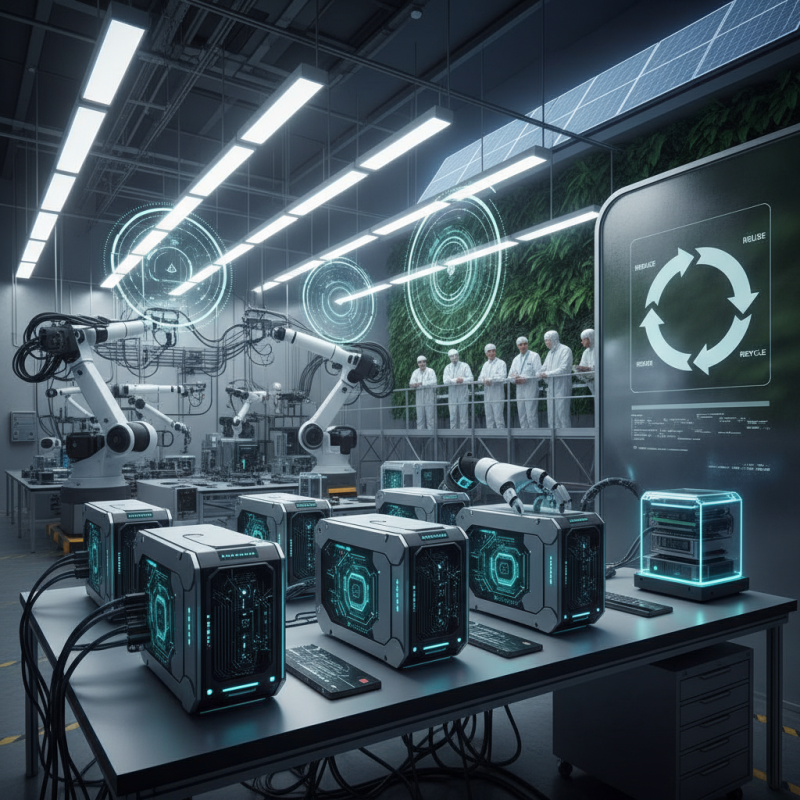
As we approach 2026, artificial intelligence (AI) and machine learning (ML) are reshaping the landscape of industrial PCs. These technologies allow for more efficient data processing and real-time analytics, enhancing decision-making in manufacturing and logistics. AI algorithms can analyze vast datasets, identifying patterns and predicting equipment failures before they occur. This predictive maintenance capability reduces downtime and increases productivity in industrial environments.
The integration of AI with edge computing is becoming crucial. Industrial PCs will leverage local data processing capabilities, allowing for quick responses to changing conditions on the factory floor. This connectivity improves automation and operational efficiency. Yet, there are concerns about data security and reliability. With increased connectivity, robust measures must be in place to safeguard sensitive information.
Moreover, the adoption of AI and ML is not without its challenges. Many organizations struggle with the implementation process due to a lack of expertise. There is a gap in reliable training and education for the workforce. Addressing these issues is necessary for the full benefits of AI to be realized. Balancing innovation with practicality will be a critical focus for industry leaders as they navigate these evolving technologies.
Growth of Edge Computing in Industrial Applications by 2026
The rise of edge computing in industrial applications is undeniable. By 2026, the global edge computing market is projected to exceed $43 billion, showcasing a compound annual growth rate of over 30%. This surge is driven by the need for faster data processing and real-time analytics. Manufacturers are increasingly harnessing edge devices for efficient operations.
Edge computing reduces latency, enhancing machine performance and decision-making. For instance, factories utilizing edge solutions report up to a 40% decrease in response time. This speed is crucial for automation and smart operations. However, integration challenges persist. Many companies struggle to implement edge infrastructure effectively.
Security remains a concern as well. As devices increase at the edge, so do vulnerabilities. A report highlighted that 70% of industrial enterprises face security risks with edge deployments. Addressing these issues requires a strategic approach. The focus should be on robust security protocols and continuous monitoring practices to ensure a reliable edge environment.
Increased Adoption of Ruggedized Industrial PCs in Harsh Environments
The growing demand for ruggedized industrial PCs is shaping the future of technology in harsh environments. According to a recent market research report, the ruggedized PC market is projected to grow by 7.6% annually, reaching $4.5 billion by 2026. This growth can be attributed to industries like manufacturing, oil and gas, and logistics that require durable devices.
Ruggedized PCs are designed to withstand extreme temperatures, vibrations, and resist dust and moisture. Companies in these sectors recognize the importance of reliability. A study highlighted that 70% of industrial accidents are caused by equipment failure. This suggests that investing in robust hardware can significantly reduce downtime and enhance safety.
However, transitioning to ruggedized solutions presents challenges. The initial cost can be higher than standard PCs. Organizations must weigh the costs versus the benefits of increased durability. Continuous training and updates for staff are also necessary to maximize the lifespan of these systems. As these devices become more prevalent, the industry must stay adaptable to evolving needs and technologies.
Top Industrial PC Trends to Watch in 2026 - Increased Adoption of Ruggedized Industrial PCs in Harsh Environments
| Trend | Description | Projected Growth (%) | Key Benefit |
| Ruggedized Design | Increasing use of industrial PCs designed to withstand extreme temperatures, vibrations, and dust. | 25% | Enhanced durability and longevity. |
| IoT Integration | Integration of Internet of Things capabilities for real-time data monitoring and analytics. | 30% | Improved productivity through data-driven insights. |
| Wireless Connectivity | Adoption of wireless technologies to facilitate easier communication and data transfer. | 20% | Greater flexibility and reduced installation costs. |
| AI & Machine Learning | Utilization of AI algorithms to optimize operational processes and predictive maintenance. | 35% | Increased efficiency and decreased downtime. |
| Edge Computing | Processing data closer to its source to reduce latency and improve response times. | 28% | Faster decision-making capabilities. |
Cybersecurity Trends Shaping Industrial PC Designs Through 2026
As we look toward 2026, cybersecurity will undeniably shape the design of industrial PCs. The increase in cyber threats has made security a top priority for manufacturers. With more devices connected to the internet, vulnerabilities increase daily. Thus, building in robust security from the ground up is essential.
Beyond just firewalls and antivirus software, industrial PCs must now incorporate advanced security layers. Features like secure boot processes and hardware-based security modules are becoming essential. There's a growing recognition that cyber hygiene plays a critical role in operational safety. Regular updates and patches will be necessary, yet many companies still struggle with compliance.
Reflecting on these trends, industry players must reassess their current approaches. Inadequate training around cybersecurity risks exists in many organizations. Employees often overlook the human element in security. Advances in technology alone won’t guarantee protection. Therefore, a holistic approach that combines technology with training and awareness is crucial for the future.
Integration of IoT Solutions with Industrial PCs for Enhanced Performance
The integration of IoT solutions with industrial PCs is transforming operations. As industries face increasing demands, smart solutions become essential. IoT enhances data collection and analysis. It enables real-time monitoring and control of equipment, leading to improved decision-making.
Integrated systems offer better performance. They streamline workflows and reduce downtime. For example, predictive maintenance can foresee equipment failures. This minimizes costly disruptions and boosts overall efficiency. However, implementing these systems isn't without challenges. Companies may encounter issues with data security and interoperability of devices.
Moreover, the rapid pace of technology can be overwhelming. Organizations must invest in training to ensure staff can adapt. They need to address potential knowledge gaps. Balancing innovation with reliability remains crucial. Embracing IoT in industrial PCs brings benefits, yet it requires careful planning and execution. Organizations must be prepared for both the rewards and the hurdles ahead.
Top Industrial PC Trends to Watch in 2026
 Metal Processing
 Automotive
 Food & Beverage
 Chemical
 Consumer Electronics
 Healthcare
 New Retail
 Semiconductor
 Welding
 Palletizing
 Loading and Unloading
 Assembly
 Bin Picking
 Gluing
 Insertion
 Polishing
