Top Agricultural Drones to Buy in 2026 for Optimal Farming?
As we approach 2026, the world of agriculture is evolving rapidly. Agricultural Drones have emerged as game-changers in this sector. These innovative machines assist farmers in monitoring crops, optimizing resources, and enhancing yields. However, choosing the right agricultural drone can be daunting. The market is filled with options, each promising unique features and benefits.
Many farmers are exploring these advanced technologies to improve efficiency. But, not all agricultural drones are created equal. It's essential to consider factors like flight time, payload capacity, and sensor technology. Some models shine brightly in specific applications, while others may fall short. This discrepancy can significantly impact farming operations.
In a time when sustainability is crucial, agricultural drones offer a pathway to smarter farming. They can help minimize waste and reduce environmental impact. Yet, the decision must be well-informed, as investments in these technologies can be substantial. With the right knowledge, you can select an agricultural drone that aligns with your farming goals. The future of farming awaits, but only if you are prepared for it.
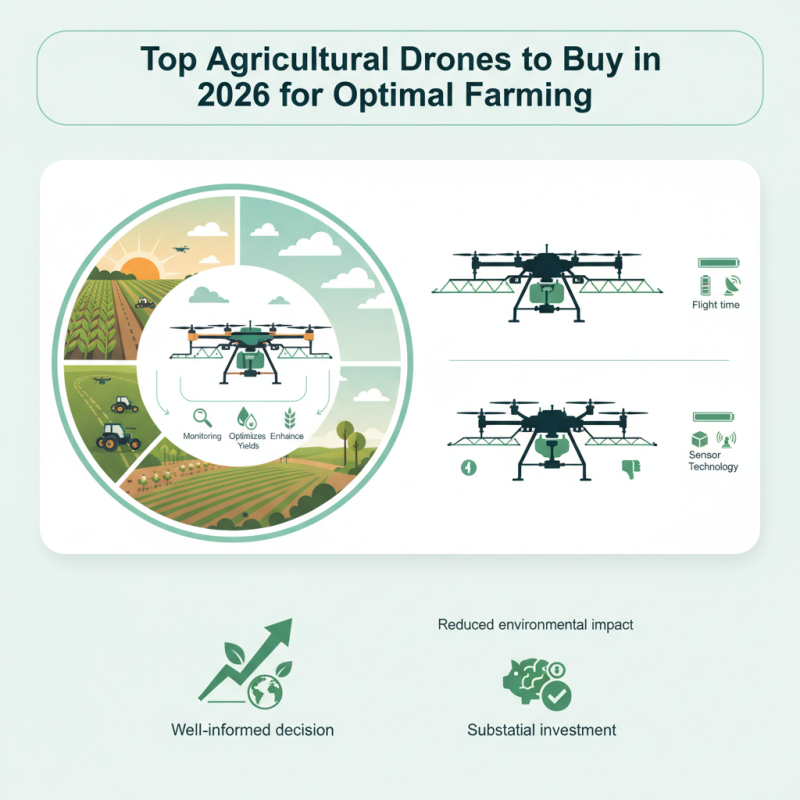
Overview of Agricultural Drones and Their Importance in Farming
Agricultural drones have become essential tools in modern farming. They offer accuracy and efficiency, providing farmers with crucial data for better decision-making. Drones can assess crop health, monitor irrigation systems, and even help in planting seeds. Their ability to cover large fields quickly enhances productivity and reduces labor costs. Farmers can now track growth patterns and identify issues early, leading to better crop yields.
When considering the integration of drones into farming, here are some tips. First, ensure you understand the local regulations regarding drone usage. Some areas have restrictions that could impact your operations. Second, invest time in learning about drone technology. Familiarizing yourself with flight operation and data analysis will maximize your investment. Many farmers find that ongoing education in drone applications leads to better results in the field.
While drones offer numerous benefits, they are not a one-size-fits-all solution. Some farms may struggle with high initial costs. It's important to evaluate whether the benefits outweigh these costs. Experimenting in small areas first can help determine the effectiveness of drones on your farm. Balancing technology with traditional practices can yield the best outcome for your specific needs.
Key Features to Look for in Agricultural Drones for 2026
As the agricultural industry evolves, selecting the right drone involves understanding key features. Farmers should prioritize precision agriculture technology. This helps in effectively monitoring crop health and optimizing yields. Drones equipped with multispectral sensors can provide invaluable data. These sensors analyze plant health based on light absorption patterns.
Battery life is crucial for efficiency. A drone that can cover large fields without frequent recharging promotes better productivity. Look for models that offer at least 30 minutes of flight time. Additionally, ease of use is vital. Intuitive software can streamline data collection and analysis. Farmers without technical expertise should choose user-friendly interfaces.
Lastly, consider payload capacity. Drones that can carry various sensors or sprayers enhance versatility. However, heavier loads may affect flight duration. Users must balance this factor based on their specific needs. Ultimately, the ideal agricultural drone will cater to both current needs and future scalability.
Top Agricultural Drone Manufacturers and Their Leading Models
When considering agricultural drones in 2026, several manufacturers stand out for their innovative designs and technology. Companies are focusing on precision farming, and drones play a crucial role. They offer real-time data and monitoring capabilities. This allows farmers to make informed decisions about crop health and resource management.
Leading models from top manufacturers emphasize user interfaces that are intuitive, allowing farmers to navigate and operate them easily. These drones often include features like advanced imaging sensors, which capture detailed aerial imagery. This feedback enables early detection of issues like pests or nutrient deficiencies. However, some users report challenges in data integration with existing farm management systems.
Despite advancements, limitations exist. Battery life may still hinder prolonged use in larger fields. Furthermore, regulations and airspace restrictions continue to pose challenges for drone operations. Some farmers have expressed concerns over the learning curve associated with new technology. Adjusting to these tools requires effort and time, indicating that while the potential is vast, the journey may not be entirely straightforward.
Comparative Analysis of Performance and Pricing for 2026 Drones
As we approach 2026, agricultural drones are becoming essential tools for farmers. A recent report by AgFunder highlights that precision agriculture is set to grow by 25% annually. Drones enhance efficiency in monitoring crop health and managing resources.
Performance varies among drone models. Some drones excel in imaging capabilities, while others focus on endurance. A study from Statista indicates that drones equipped with multispectral cameras can improve yield predictions by up to 30%. However, pricing remains a concern. The average cost of high-performance agricultural drones can exceed $10,000, making accessibility an issue for small-scale farmers.
Farmers must consider both performance and cost to ensure optimal investment. Not all drones deliver the expected results in different environments. Some models struggle with battery life when covering large fields. Additionally, there’s a learning curve associated with using sophisticated technology effectively. Continuous training and adaptation are crucial for success in this evolving field. Finding the right balance between technology and practical farming needs is essential for sustainable farming in the future.
Top Agricultural Drones to Buy in 2026 for Optimal Farming
| Model | Flight Time | Payload Capacity | Camera Resolution | Price | Features |
| Drone A | 30 min | 5 kg | 20 MP | $3,500 | Autonomous flight, GPS mapping |
| Drone B | 40 min | 2 kg | 12 MP | $2,800 | Real-time monitoring, thermal imaging |
| Drone C | 25 min | 10 kg | 24 MP | $4,200 | Spraying capability, smart sensors |
| Drone D | 50 min | 7 kg | 16 MP | $3,900 | Long-range transmission, obstacle avoidance |
Future Trends in Agricultural Drone Technology for Optimal Farming
Agricultural drone technology is rapidly evolving. In 2026, we will likely see drones equipped with advanced AI for real-time data analysis. This can enhance pest detection and crop health monitoring. With high-resolution cameras and multispectral sensors, farmers can assess fields more effectively. Imagine optimizing irrigation and fertilization based on precise aerial imagery.
The integration of autonomous flight paths will also simplify farming operations. Drones could operate on preset routes, covering large areas without manual input. However, reliance on technology may lead to challenges. Farmers must remain informed about their equipment to ensure reliability. Regular maintenance is crucial to avoid costly breakdowns. Training will be essential, as new capabilities can overwhelm less tech-savvy users.
Privacy concerns are also noteworthy. The use of drones raises questions about data collection and sharing. Farmers need to handle data responsibly to build trust with the public. As these trends continue, a balance between innovation and ethics will be vital for the agricultural sector. Adaptability will define success, with farmers needing to embrace change while navigating potential pitfalls in this new technological landscape.

 Metal Processing
 Automotive
 Food & Beverage
 Chemical
 Consumer Electronics
 Healthcare
 New Retail
 Semiconductor
 Welding
 Palletizing
 Loading and Unloading
 Assembly
 Bin Picking
 Gluing
 Insertion
 Polishing
